When it comes to underwater and waterfront construction, establishing a secure, dry work environment below the waterline can be one of the biggest engineering challenges.
This is where pneumatic caissons come in as a time-tested solution that allows builders to excavate and build foundations deep below water with controlled, pressurized access.
In this article, we’ll explain what pneumatic caissons are, how they work, why they’re used, and what advantages and considerations they bring to marine and civil construction projects.
Understanding Pneumatic Caissons
A pneumatic caisson is a large, watertight structure used in construction to create a dry workspace for workers and equipment in environments where groundwater or bodies of water would otherwise make excavation impossible.
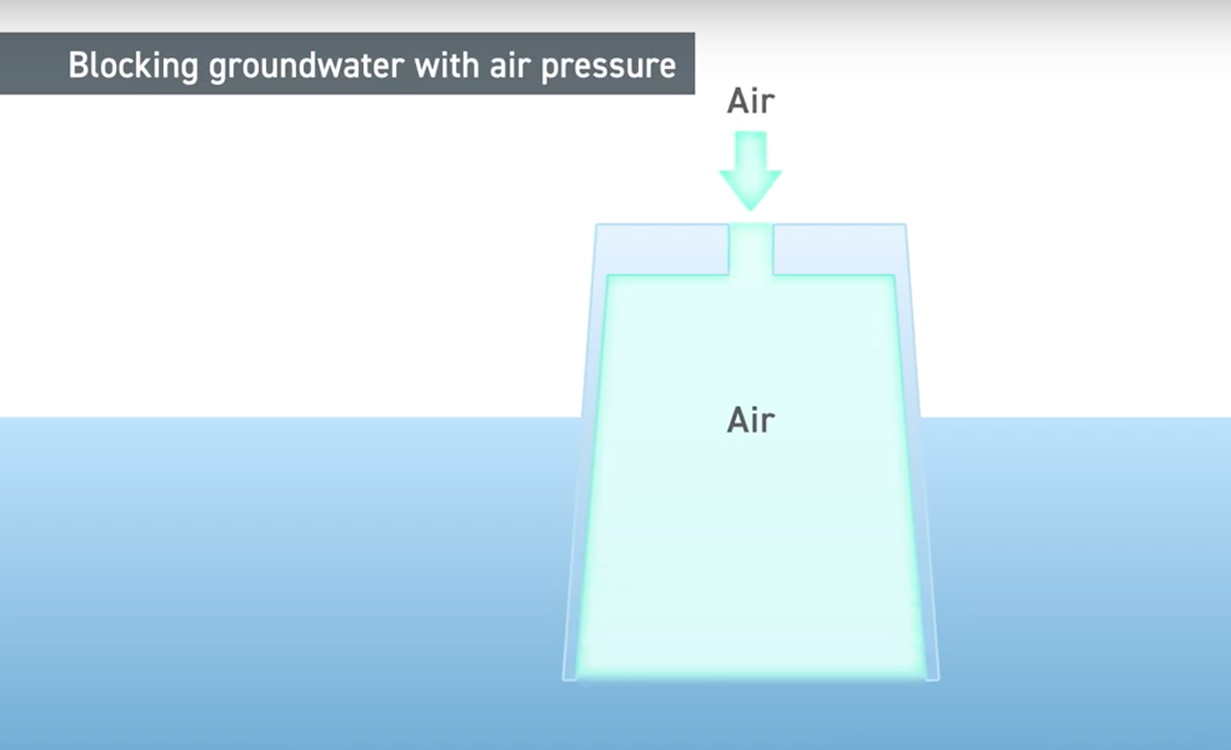
Think of a pneumatic caisson as a pressurized “bubble” that keeps water and unstable soil out of a workspace.
By pumping compressed air into the interior chamber of the caisson, water is kept at bay, allowing workers to excavate soil safely down to the required depth. Once the desired depth is reached, the caisson is typically filled with concrete to form a durable foundation.
Pneumatic caissons are especially valuable for projects like bridge piers, docks, marinas, seawalls, and other structures where underwater foundations are necessary.
How Pneumatic Caissons Work
At its core, a pneumatic caisson functions by maintaining air pressure inside the chamber that is greater than the surrounding water pressure. This prevents water and soil from entering the workspace.
Here’s a step-by-step look at how they typically operate:
- Lowering the Caisson: A caisson, usually made of steel and/or concrete, is positioned on the water surface and gradually lowered into place over the planned foundation location.
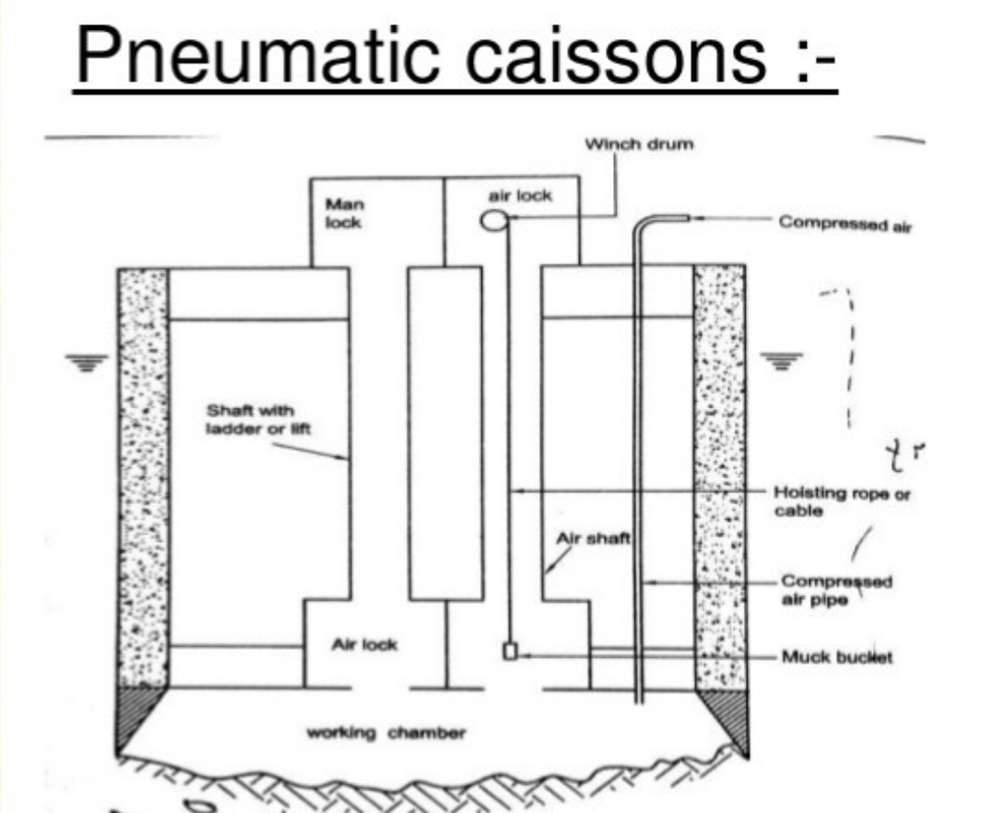
- Pressurizing the Chamber: Once the caisson’s bottom edge (called the cutting edge) settles into the seabed or soil, compressed air is pumped into the working chamber.
- Excavation Under Pressure: Workers enter the pressurized chamber through airlocks and begin excavating soil and sediment. As material is removed, the caisson slowly sinks to the target depth under its own weight.
- Completion: After reaching the required elevation, the working chamber is typically filled with concrete to become part of the permanent foundation structure.
- Release and Integration: Once concrete curing is complete, the area above the caisson can be built upon, whether it’s a bridge support, marina deck, or seawall footing.
Key Components of a Pneumatic Caisson System
A typical pneumatic caisson system includes:
- Watertight Outer Shell: Usually constructed from reinforced concrete and steel, this shell keeps water and soil out.
- Working Chamber: The pressurized area where workers excavate.
- Airlocks: Controlled entrances that allow personnel and materials to move in and out without losing pressure.
- Cutting Edge: The lower boundary of the caisson designed for penetrating soil and sediment.
- Compressed Air System: Equipment that pumps and regulates air pressure to maintain a dry environment inside the chamber.
Why Use Pneumatic Caissons?
Pneumatic caissons are favored in many marine projects because they provide:
Dry, Stable Work Conditions
By keeping water out through controlled air pressure, caissons provide a reliable dry work area in conditions that would otherwise require constant dewatering or divers.
Deep, Strong Foundations
Pneumatic caissons can reach deep, stable soil layers or bedrock beneath riverbeds, lakes, or coastal zones, making them ideal for heavy infrastructure.
Minimal Groundwater Disruption
The pressurized balance between internal air and external water limits the disturbance of surrounding groundwater and soil stability.
Versatility Across Soil Types
Pneumatic caissons can be adapted to many challenging soil conditions, including soft mud, sand, and mixed sediments.
Common Applications
Pneumatic caisson foundations are used in a variety of environments, including:
- Bridge piers and abutments
- Marina and dock foundations
- Large commercial waterfront buildings
- Dam structures and intake systems
- Underwater utility installations
Any project that requires strong support below the waterline or below the water table can potentially benefit from this construction method.
Pneumatic Caissons vs Other Foundation Methods
It’s helpful to compare pneumatic caissons with other foundation types:
- Open Caissons: These are simpler but rely on natural conditions and dewatering, and are usually limited to shallower depths.
- Box Caissons: Pre-fabricated and installed, box caissons are suited for situations where floating and setting the unit in place is feasible, but they don’t rely on pressurized chambers.
Pneumatic caissons are often the most suitable choice when deep excavation below water or high groundwater is required, especially in soft or unstable soils.
Ready to Get Started?
Contact Fender Marine today for a consultation on how we can support your next marine construction project.
Our experts can help assess your site, recommend the right foundation strategy, and provide a competitive quote.