
When you hear stone revetment, you probably think of erosion control, wave protection, and long-term shoreline stability.
And yes, that’s the job.
But here’s what often gets overlooked: a well-designed stone revetment can completely transform how a shoreline looks and feels.
When stone selection, placement, and slope are done right, revetments don’t just protect land. they enhance it.
They frame the water. They blend into the landscape. They make waterfronts feel intentional instead of industrial.
Below are some of the most scenic stone revetment projects we’ve come across, starting with one we’re especially proud of.
1. Florida Lakeshore by Fender Marine Construction

This Florida lakeshore project is a great example of what happens when engineering, experience, and aesthetics all work together.
Instead of using uniform stone or a rigid, artificial look, this revetment combines varied stone sizes and natural color tones. The result is a shoreline that feels organic, almost like it’s always been there, while still providing serious protection against erosion and wave action.
What makes this project stand out:
-
Stones were selected to match the surrounding environment.
-
The slope transitions naturally into the waterline.
-
The revetment blends into existing vegetation and tree cover.
-
Function never overpowers the visual appeal.
If you’re looking at your shoreline and wondering “Can protection still look natural?” this project answers that question with a confident yes.
2. Forest Lakeshore
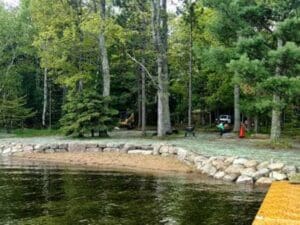
Set against a dense forest backdrop, this stone revetment shows how shoreline protection can feel rustic, calm, and completely in tune with nature.
The stones are substantial enough to handle erosion but arranged in a way that doesn’t interrupt the natural shoreline flow. Instead of standing out, the revetment becomes part of the landscape,supporting campsites, trails, and waterfront access without stealing the spotlight.
This is a great example of how revetments work especially well in:
-
Campgrounds and retreat areas.
-
Natural parks and forested lakes.
-
Shorelines where visual harmony matters just as much as durability.
3. Riprap Along Forest
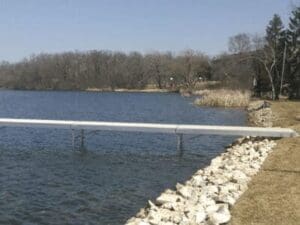
This project leans into contrast,and it works beautifully.
Light-colored riprap stones line the shoreline, paired with a simple pier extending into the water. The stone color reflects light differently depending on the season, making the shoreline look crisp in summer and striking in winter.
Why this design works so well:
-
Lighter stone brightens the shoreline without looking artificial.
-
The revetment visually frames the pier instead of competing with it.
-
Clean lines meet natural surroundings in a balanced way.
4.Urban Park Stone Revetment
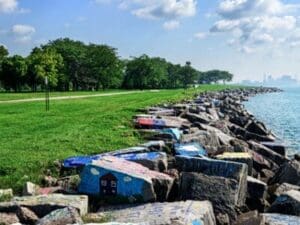
Stone revetments aren’t just for private properties and remote lakes. This Evanston park proves they can thrive in high-traffic public spaces, too.
Here, large stones form a durable shoreline barrier while also becoming an interactive surface for the community. Over time, visitors have added chalk drawings directly onto the stones, turning infrastructure into a living, changing feature of the park.
This project shows how revetments can:
-
Protect urban shorelines from constant use and wave action.
-
Act as informal seating or visual landmarks.
-
Become part of the public experience, not just background engineering.
5. Lakeside Villas Riprap Shoreline
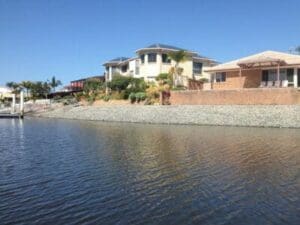
At this upscale lakeside development, riprap was used not just for protection,but for cohesive design.
Smaller stones were chosen to match the scale of the villas and docks, creating a shoreline that feels refined rather than rugged. The color palette complements the architecture, tying the water, structures, and shoreline together visually.
This is a strong example of revetments working especially well in:
-
Residential waterfront communities.
-
Marina-adjacent properties.
-
Developments where appearance impacts property value.
6. Private Beach Stone Revetment,Minnesota
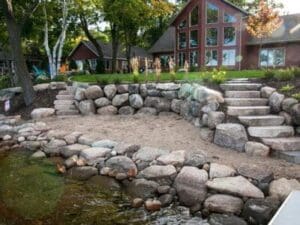
This backyard project proves that you don’t need a massive shoreline to make a big visual impact.
Large natural stones form a revetment that protects the shoreline while gently transitioning into a private beach area. Instead of blocking access to the water, the design encourages it ,creating a shoreline that feels both protected and inviting.
For homeowners, this type of revetment offers:
-
Long-term erosion control.
-
A clean, natural edge between land and water.
-
A more finished, intentional waterfront look.
Why Stone Revetments Work So Well (When Done Right)
A well-built stone revetment doesn’t fight the water — it works with it. Instead of reflecting wave energy back toward the shoreline, the sloped stone surface absorbs and disperses that energy, reducing erosion and helping the shoreline stay stable over time.
This makes revetments especially effective in areas with constant wave action or fluctuating water levels.
Stone revetments are also built to last. When the right stone size and placement are used, the structure can withstand years of exposure with very little maintenance. Small shifts in the stones aren’t a failure,they often help the revetment settle naturally and strengthen as it adapts to its environment.
Just as important, stone revetments can be designed to look natural.
By following the shoreline’s contours and using materials that match the surrounding landscape, a revetment can feel like part of the environment rather than a hard boundary between land and water. When done right, it protects the shoreline while enhancing how the waterfront looks and feels.