
Mistakes might not be anyone’s favorite topic, but when it comes to dock building, they’re absolutely worth talking about.
If you’re planning to add a dock to your property, it’s a good idea to pause for a moment and ask yourself what could go wrong, and, more importantly, how you can avoid it.
In Central Florida, docks are exposed to far more than just daily use. Water levels change, soils shift, storms roll through, and the sun and moisture take a constant toll on materials. When these factors aren’t considered from the start, even a brand-new dock can begin to show problems much sooner than expected.
Many dock issues don’t come from poor craftsmanship, but from design decisions made early on.
Understanding the most common dock design mistakes in Florida can help you make smarter choices, protect your investment, and build a dock that’s designed to last in our local conditions.
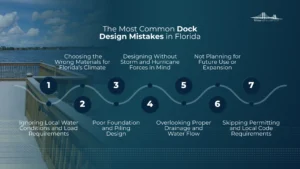
Mistake #1: Ignoring Local Water Conditions and Load Requirements
How does water behaves around your property?
If you haven’t thought about it, now it’s the time to do it. Especially in Central Florida.
One of the biggest dock design mistakes in Florida is treating all waterfronts the same.
The reality? Where your dock sits, and how that water behaves ,has a massive impact on how long it will last.
Here’s what usually gets overlooked:
- Brackish vs. saltwater exposure: Salt and brackish water speed up corrosion fast. If materials and fasteners aren’t chosen for that environment, things start rusting long before you expect them to.
- Wave action, wakes, and changing water levels: Your dock isn’t just sitting there looking pretty. It’s constantly being pushed, pulled, and flexed by boat wakes, wind, and fluctuating water levels. If it’s designed too rigid, or without enough reinforcement,it’ll show wear early.
- Underestimating weight and usage: A dock isn’t just for walking. Boats, lifts, coolers, furniture, and weekend guests all add up. When load requirements are guessed instead of calculated, sagging and instability aren’t far behind.
And here’s the kicker: A dock that works perfectly on a calm Central Florida lake may fail quickly in a coastal canal. Different water, different soil, different forces,same design logic won’t cut it.
If the design doesn’t match the water conditions from day one, you’re basically asking your dock to work harder than it was built for.
Mistake #2: Choosing the Wrong Materials for Florida’s Climate
Florida looks beautiful…but the weather is kinda capricious and it can quietly destroy whatever isn’t built for it.
Sun, heat, humidity, salt in the air,it’s a brutal combo, and docks feel it first.
One of the most common dock design mistakes in Florida is picking materials based on price or appearance instead of long-term performance in our climate.
Among the things that could go wrong:
- Using untreated or poorly treated wood: Wood that isn’t properly rated for marine use won’t last long here. Add constant moisture and intense sun, and rot can start way sooner than you’d expect.
- Low-grade fasteners and hardware: Screws, bolts, and brackets might seem like small details, but they’re often the first thing to fail. Rusted fasteners lead to loose boards, wobbling sections, and safety issues.
- Mixing materials that don’t play well together: Some metals accelerate corrosion when paired with the wrong wood treatments or other metals. The result? Hidden deterioration happening out of sight.
Even docks built on freshwater lakes aren’t immune. UV exposure alone can break down materials fast, and salt in the air can still reach inland areas.
If the materials aren’t chosen specifically for Florida conditions, the dock may look fine at first,but it won’t age well.
Mistake # 3:Poor Foundation and Piling Design
If a dock fails, the problem often starts below the waterline. And unfortunately, that’s also the part most people never think about.
One of the biggest dock design mistakes in Florida is underestimating how important proper foundation and piling design really is. Your dock is only as strong as what’s holding it in place.
Some problematic factors include:
- Pilings not driven deep enough: Shallow pilings might look fine at first, but over time they can shift, loosen, or tilt, especially with changing water levels and repeated wave action.
- Undersized pilings for the load: Smaller pilings can’t properly support heavier docks, lifts, or frequent use. The result? Movement, creaking, and a dock that never quite feels solid.
- Ignoring soil conditions: Central Florida soil is often sandy and soft, with high water tables. If the dock design doesn’t account for that, the foundation won’t have the stability it needs long term.
You might not see foundation issues right away, but when they appear, they’re hard to ignore, and even harder to fix after the fact.
Mistake #4: Not Designing With Storms and Extreme Weather in Mind
In Florida, storms aren’t a surprise; they’re a guarantee.
Yet one of the most expensive dock design mistakes in Florida is building as if severe weather is an exception, not part of the deal.
Docks that aren’t designed to handle strong weather don’t usually fail in one dramatic moment. Instead, each storm takes a small toll, weakening the structure bit by bit until something finally gives.
Common oversights include:
- No allowance for rising or shifting water : Fixed docks in areas better suited for floating systems can end up fighting the water instead of adapting to it.
- Lack of flexibility in the structure : When a dock is too rigid, it can’t absorb movement from wind, waves, and surge,stress gets transferred straight into the frame.
- Skipping sacrificial or breakaway elements : Some parts are meant to give during extreme conditions. When everything is built to resist instead of release, damage spreads faster.
Florida weather doesn’t need a major hurricane to cause problems.
Seasonal storms, heavy rain, and high winds all add up. If the dock wasn’t designed with those forces in mind, it’s only a matter of time before repairs,or a redesign,become unavoidable.
Mistake #5: Blocking Water Flow and Trapping Moisture
Water moving through and around your dock is normal.
Problems start when a dock is designed in a way that traps it instead.
One of the most subtle dock design mistakes in Florida is ignoring drainage and natural water flow. It doesn’t usually cause instant damage, which is why it gets overlooked, but over time, it does real harm.
Here’s what tends to happen:
- Tightly spaced decking: When boards are packed too close together, water has nowhere to go. It sits, soaks, and slowly breaks materials down.
- Poor circulation around pilings: Stagnant water around structural supports speeds up deterioration and encourages buildup you definitely don’t want.
- Designs that block natural movement: When water flow is disrupted, pressure and moisture concentrate in all the wrong places.
In Florida’s humid environment, constant moisture is the enemy. Trapped water leads to rot, algae growth, slippery surfaces, and materials wearing out far earlier than they should.
Mistake #6: Designing Only for Today, Not Tomorrow
When a dock is designed around current needs only, it usually doesn’t age very gracefully. One of the more frustrating dock design mistakes in Florida is not thinking a few years ahead.
What works perfectly right now might feel limiting or problematic sooner than you expect.
Common surprising moments include:
- No allowance for bigger or additional boats Boat sizes change, lifestyles change, and suddenly the dock feels cramped or underbuilt.
- Weight limits that don’t leave room to grow Adding a lift, furniture, or equipment later can push the dock beyond what it was designed to handle.
- No planning for power, lighting, or utilities Retrofitting electrical or other features after the fact is almost always more complicated and more expensive.
The lesson with this one?
A little future-proofing during design can save you from costly upgrade, or full rebuilds,down the line.
Mistake #7: Skipping Permits and Local Codes
You can do everything right with materials, layout, and structure, and still end up with a major problem if permitting and local requirements are ignored.
One of the most costly dock design mistakes in Florida is assuming permits are just paperwork or something that can be handled later. In reality, local regulations shape what you can build, where you can build it, and how it must be designed.
Here’s where things tend to fall apart:
- Designing first, checking regulations later: Some dock layouts simply aren’t allowed in certain waterways or environmental zones.
- Overlooking environmental and shoreline protections: Florida has strict rules to protect marine life, water quality, and neighboring properties, and they vary by location.
- Using a “one-size-fits-all” design :What’s permitted on one lake or canal may not be approved just a few miles away.
Nobody gets excited over the idea of paperwork, but ignoring local regulations can quickly become a serious challenge.
How to Avoid Dock Design Mistakes in Florida
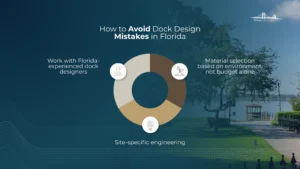
The good news? Most dock design mistakes in Florida are completely avoidable. It all comes down to making the right decisions before anything is built.
Here’s what actually makes a difference:
Work With Dock Designers Who Know Florida
Florida isn’t a place to learn dock design through trial and error.
Designers who understand local waterways, weather patterns, soil conditions, and permitting requirements can spot potential problems early, before they turn into expensive fixes.
Design for Your Specific Waterfront
No two properties are the same. Water depth, movement, shoreline conditions, and usage all matter. Site-specific engineering ensures your dock is built for your location, not a generic template that may work somewhere else.
Choose Materials Based on the Environment, Not Just the Price
It’s tempting to cut costs on materials, but in Florida, cheaper often means shorter lifespan. Selecting materials that can handle moisture, sun, corrosion, and constant exposure helps your dock stay safer and look better for longer.
Frequently Asked Questions About Dock Design in Florida
How long should a dock last in Florida?
With the right design, materials, and installation, a dock in Florida can last decades. Early failure usually isn’t caused by age,it’s caused by design choices that don’t account for local water conditions, weather, and usage.
Are dock design requirements different for lakes versus canals?
Yes. Central Florida lakes and coastal or brackish canals behave very differently. Water movement, soil conditions, corrosion risk, and permitting requirements all change based on location, which is why a one-size-fits-all dock design rarely works in Florida.
What materials work best for Florida docks?
Materials need to handle constant moisture, intense sun, and corrosion. Marine-grade lumber, properly rated composites, and high-quality fasteners designed for waterfront use tend to perform best. Choosing materials based solely on cost often leads to early repairs or replacement.
Do I really need permits to build or modify a dock?
In most cases, yes. Florida has local and environmental regulations that affect dock size, placement, and construction. Skipping permits or approvals can result in fines, forced changes, or even removal of the dock.
Can dock design mistakes be fixed after construction?
Some issues can be corrected, but many are costly and disruptive once the dock is built. Design-related problems are always easier,and cheaper,to prevent than to fix later.